Does this sound like your week?
A funder pays sixty days late and payroll is Friday. The board wants a strategic plan, and the last one is in a drawer where plans go to die. One person holds every password, every relationship, and every reason the place runs — and it might be you. Meanwhile demand is up, three-quarters of nonprofits have open positions they cannot fill, and the thing you meant to fix in March is still sitting there in September.
Here is the part nobody says out loud. You feel the weight of it most on the drive home, along with a quiet guilt about what did not get done, and the suspicion that a better leader would have this under control.
That suspicion is wrong. Burnout is not a personal failure. It is what happens to a capable person running an organization that has no way to show her trouble before it arrives. The sector starves the organizations it trusts most, then measures them by the wrong yardstick. None of that is your fault. Living with it does not have to be your job.
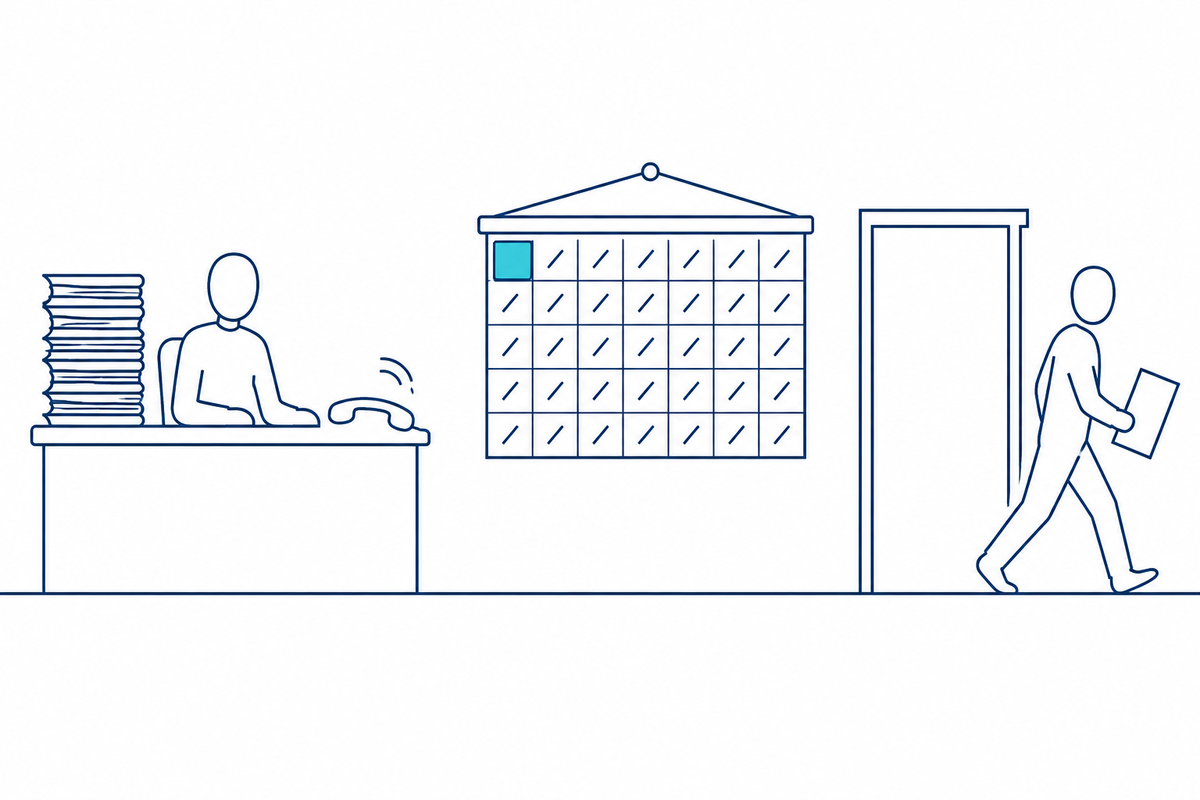
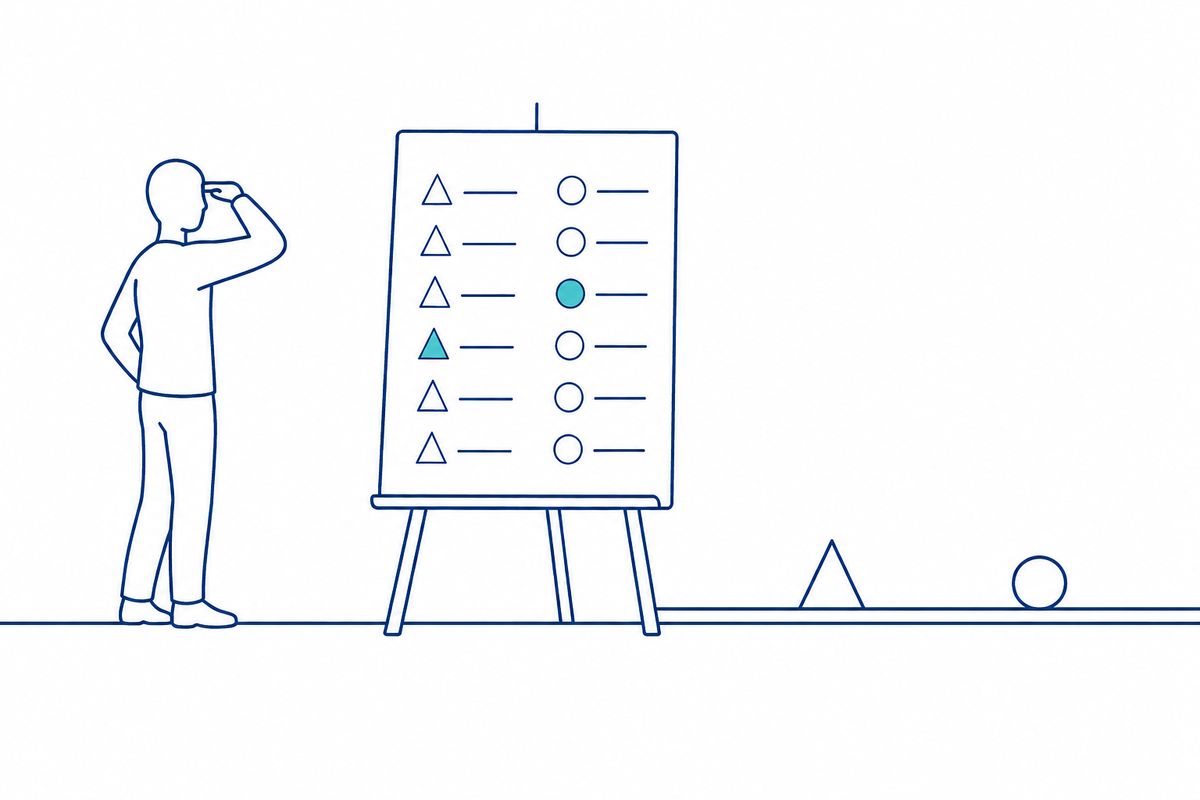
The problem is not time. It is what you can see.
You think the problem is that you do not have enough hours. It is not. The problem is that nothing in your week is built to show you trouble before it arrives — or to show you the openings for growth that pass by while you are busy. Constant firefighting is not a workload issue; it is a warning sign that the organization has no early-warning system. So every risk shows up as an emergency, every emergency lands on you, and the opportunities go to someone who was paying attention.
One organization I worked with mapped its risks for the first time and found that its biggest exposure was a subcontractor serving elderly clients — a gap nobody had named because everybody was busy. They fixed it in a month. Nothing about their budget changed. What changed was that they could see.
The same list that shows you what could go wrong shows you what could go right. Humans are hard-wired to look for threats, but opportunities are where the most exciting action is. Negativity bias guarantees the bad news will reach you. The good news needs a delivery system. That is what the newsletter is: leaders who see what worked somewhere else, in enough detail to try it, stop being surprised in both directions. Simple beats sophisticated every time.
I have watched this happen since 1990.
I am Ted Bilich. I spent two decades working around the world as a lawyer based in Washington, DC, and taught at Georgetown Law, before I started Risk Alternatives to work with nonprofits directly. I wrote Managing Your Nonprofit for Resilience (Wiley) after watching too many good organizations fail for reasons that were visible six months earlier. I know the sixty-day funder and the board that will not decide. I have sat in the room.
Most of my time now goes to the Nonprofit Good News-Letter and to building tools that funders and associations can put in front of whole networks at once. (If your organization is facing something specific that needs a second set of eyes, you can still reach me.)

Carousel items






Three steps. None of them costs money.
- Take ten minutes on Wednesday. Subscribe, and every week you get three nonprofits that did something that worked, with enough detail to copy. Not commentary. Not a doom spiral. See for yourself: $200,000 left one nonprofit through a phone call, a hospice told families they don't need permission to call, a food bank set out to double what it distributes. The full archive is open.
- Run one thing this month. Every issue carries a Board Corner exercise, a few quick fixes that improve operations in an afternoon, and AI prompts written for nonprofit work that you can paste and use. Pick one. Put it on the next agenda, or try it Thursday morning. If your board does not know what it does not know, that is fixable — and getting the board behind risk work is the exercise that pays for all the others.
- Build the early-warning habit. One hour with your team: list what could go wrong and what could go right, write a name beside each item, and set a date to check. That is the whole system. When everyone thinks like a risk manager, risk stops living in a silo — and stops living in you. Here is a five-step version if you want more structure.
A year from now
The board meets and decides something. There is a list of what could hurt you and what could lift you, with a name beside each line, and the names are not all yours. Reserves are growing because somebody finally set a number. When a funder pays late, it is a nuisance, not a crisis. Your team brings you things early — problems, yes, but also the clinic that wants a partner and the funder who just changed its guidelines in your favor.
That is where the growth comes from. A food bank in Fort Myers decided to double what it distributes and raised $30 million to do it. Eleven free clinics got $75,000 each for mental health care because a national association brought a partner to the table. A Boys & Girls Club that lost $200,000 to a cloned voice on the phone went public, recovered $180,000, and gave every other club a warning worth more than the loss. A hospice found that telling families they did not need permission to call was worth more than any new program. None of them had more time than you. They had a way of noticing, and most threats, looked at squarely, turn out to be openings.
Wednesday's ten minutes is one part of your week that focuses on what is going right. And you are no longer the only person in the building who sees trouble coming — or sees the opening before it closes.
When your funder or your state association asks what would actually help, you will have an answer. The tools behind the newsletter are built to be licensed to whole networks — so the organizations that can pay do, and you do not.

What it costs to wait
The organization that is still open but has stopped having a reason.
The founder who became the biggest risk.
The best people who left the sector because there was no way up.
The opportunity missed while everyone was busy surviving.
You know these organizations. Some of them were run by people as capable as you. Every one of those endings started as a threat somebody could have seen — and most of them, seen early, were openings for something better.
Start with Wednesday.
Free, always. Weekly, never more. No doom spiral. One click to unsubscribe.