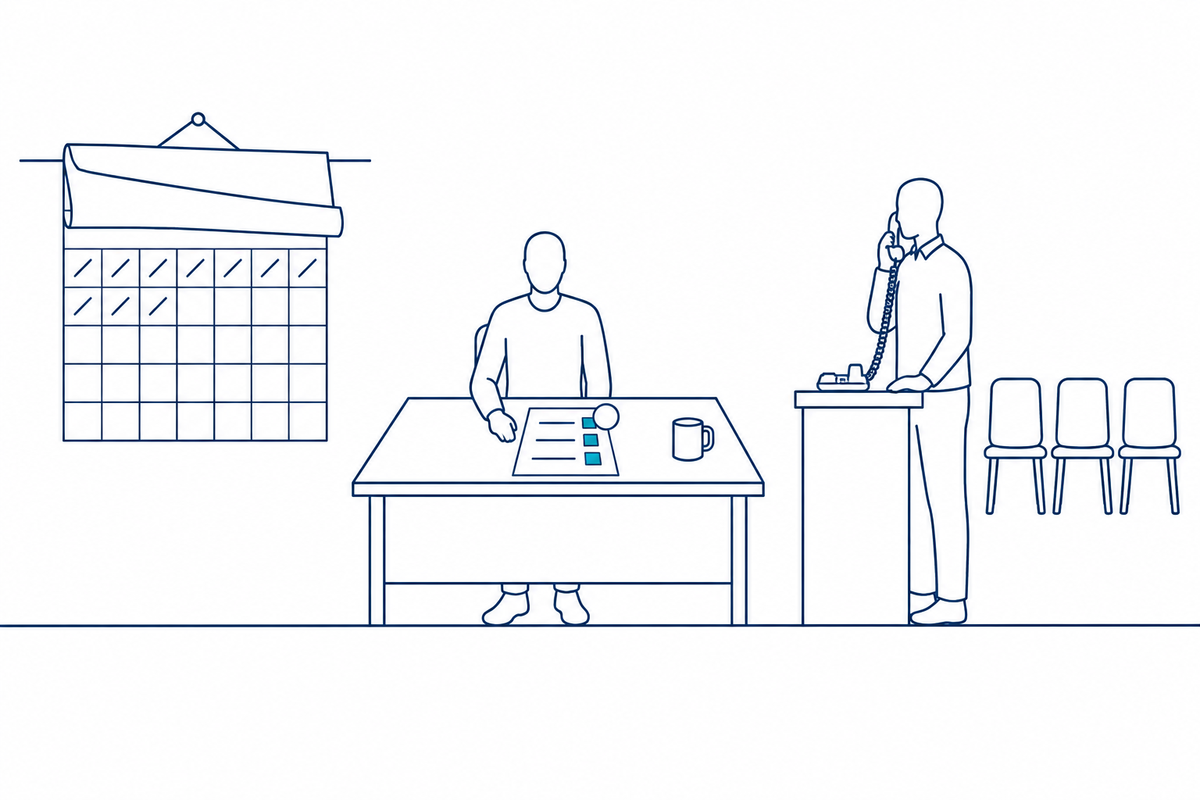
You have booked this before.
The keynote everyone loved and nobody could describe by lunch. The panel that ran twenty minutes over and ended without a point. The "risk management" session your members skipped because the title told them it would hurt. Your evaluations came back fine. Nothing in any organization changed.
Here is the part that is harder to say out loud. You are judged on the survey, but what you actually want is the executive director who emails you in March to say she ran the exercise with her board and it worked. Your members are tired. Most of them have heard four times this year that the sector is in crisis, and three-quarters of them have a job they cannot fill. One more hour of alarm, or one more hour of encouragement, costs you a slot you could have used for something they would keep.
None of that is a failing on your part. It is what happens when the speaking market sells inspiration by the hour and leaves the host to hope something sticks.
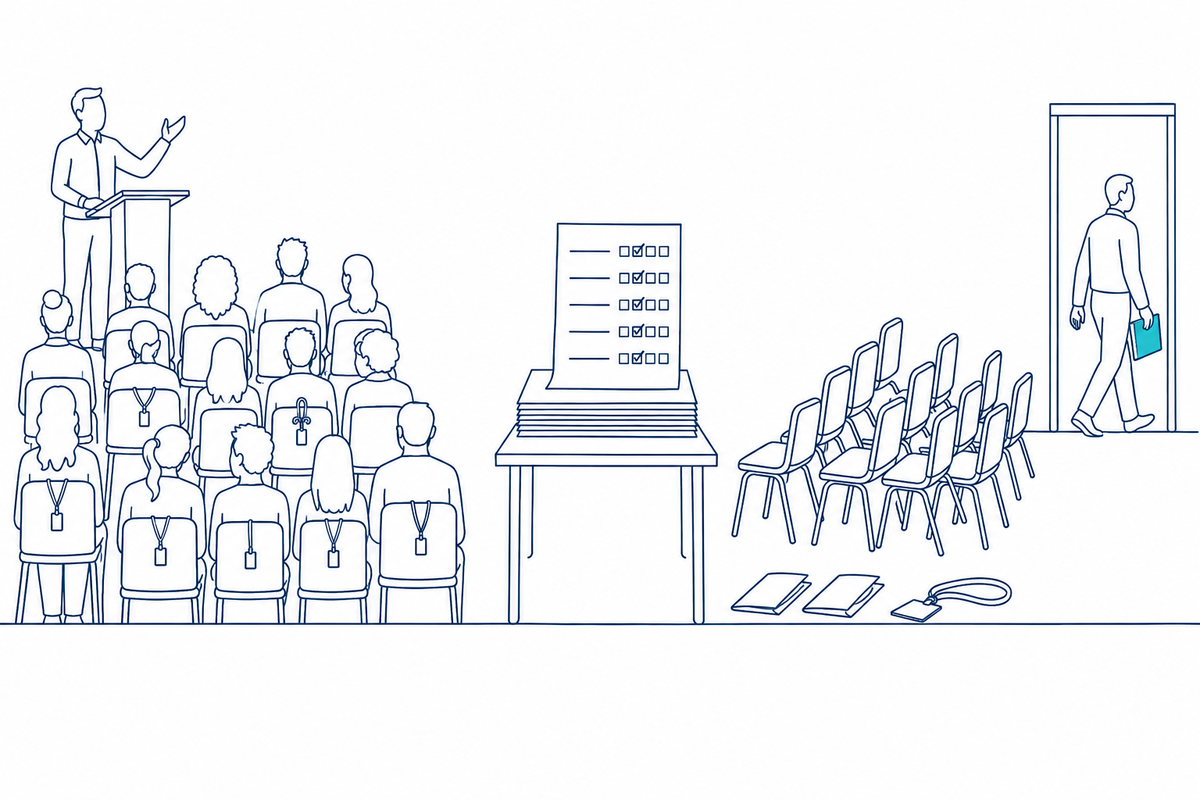
The problem is not the speaker. It is what the room leaves with.
You think the problem is finding a better speaker. It is not. The problem is that most sessions are built to be heard, and nothing in the design asks the room to decide anything. A good talk that leaves no decision behind is entertainment with a lanyard.
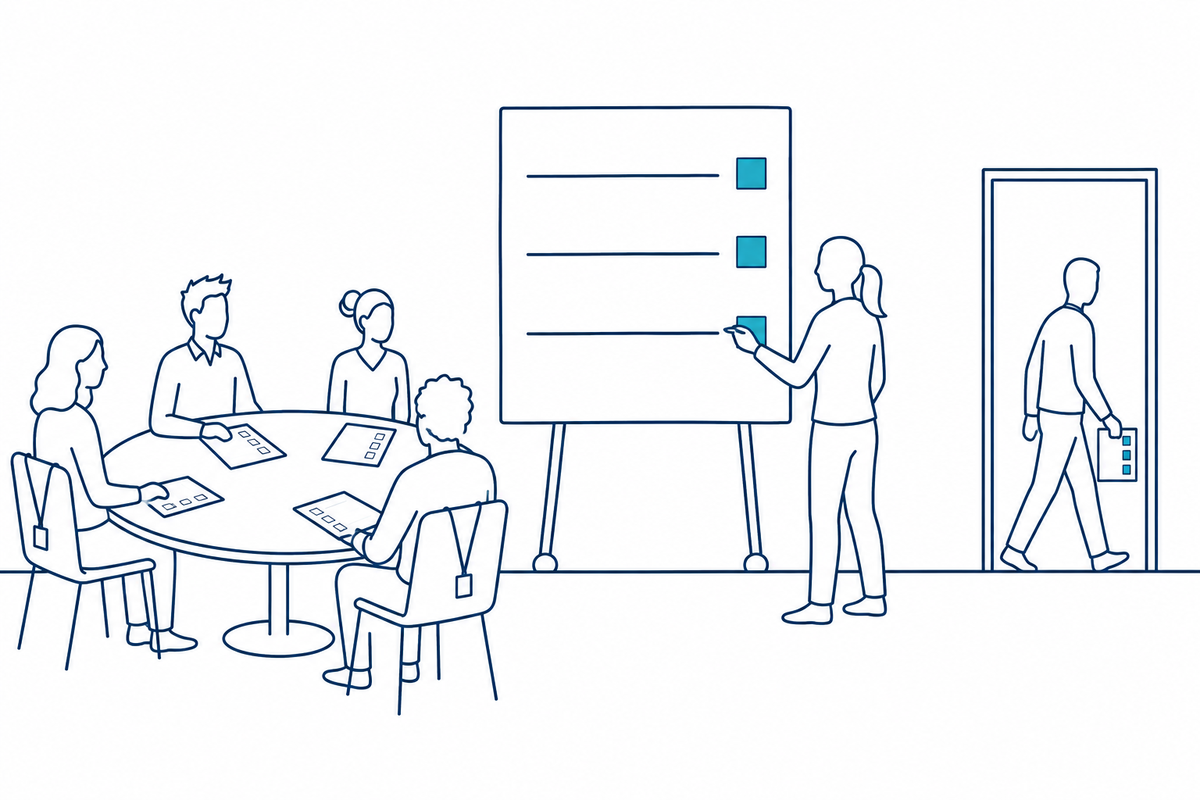
So every session I run ends the same way. Each organization in the room writes down one thing it will do, who owns it, and when the board will hear about it. In January 2021 the Community Foundation of Broward opened its resilience program with an online session I ran for ninety-four nonprofits. Twelve of them went on into a cohort; eleven finished, wrote a resiliency plan, and were funded to carry it out. In Richmond that spring, seven foundations put ninety-seven people through a three-session series built on a survey of their own grantees — seventy percent of whom had no risk management program at all. Those are not keynote outcomes. They are what a keynote can start when the host wants more than applause.
And the content has changed. Most of what a nonprofit audience hears in a given year is threat. Most of what I bring now is what worked: a food bank that set out to double what it distributes, a hospice that changed one sentence to families, sixty organizations that fixed their boards in the same season. Humans are hard-wired to look for threats, but opportunities are where the most exciting action is — and the same list that shows a room what could go wrong shows it what could go right. Your members will leave with the second list, too.
I have been standing in front of nonprofit rooms since 1990.
I am Ted Bilich. I spent two decades working around the world as a lawyer based in Washington, DC, taught at Georgetown Law, and then started Risk Alternatives to work with nonprofits directly. I wrote Managing Your Nonprofit for Resilience (Wiley) after watching too many good organizations fail for reasons that were visible six months earlier. Every Wednesday I write the Nonprofit Good News-Letter, which means I spend every week finding organizations that did something that worked — and your audience gets the current ones, not the slide from 2019.
BoardSource, Feedback Labs, the Council of Michigan Foundations, and the state nonprofit associations of Maryland, Idaho, Florida, and Minnesota have put me in front of their members. Community foundations in Memphis, Broward, and Richmond built whole programs around the sessions. Your board will ask about liability and governance; I can answer as a lawyer. Your members will ask what to do Monday; I can answer as the person who has watched a few hundred of them try.
Most of my time now goes to the newsletter and to tools that funders and associations can put in front of whole networks at once. A keynote or a workshop is often how that starts — and it is also, on its own, a good morning's work.

Carousel items
Six sessions, each built to be used the next morning.
What's actually working in the nonprofit sector. The keynote. Three to five organizations, named, that did something in the last year your members can copy — and the pattern underneath them. Drawn from the newsletter archive, so it is never the same talk twice.
Your risk radar only looks one direction. Why threat-hunting is wired into us, why opportunity looks a lot like risk, and a one-hour method for listing both with a name beside each line. The room leaves with the list started.
Escape the urgency trap. For executive directors who spend the week on problems they saw coming. The five-step version, with the one step to run this month.
The board that decides. A board session or retreat. Most boards do not know what they do not know; this session runs one exercise that changes what the next agenda looks like.
What your grantees won't tell you. For funders and program officers. Why the funding relationship hides the truth, what the numbers say when someone else asks, and the four shapes a funder-sponsored program can take.
AI for the work you actually do. Not a tour of the tools. The prompts I write for the newsletter each week — board prep, grant reporting, policy drafts — run live on your members' real problems, with the guardrails a lawyer would insist on.
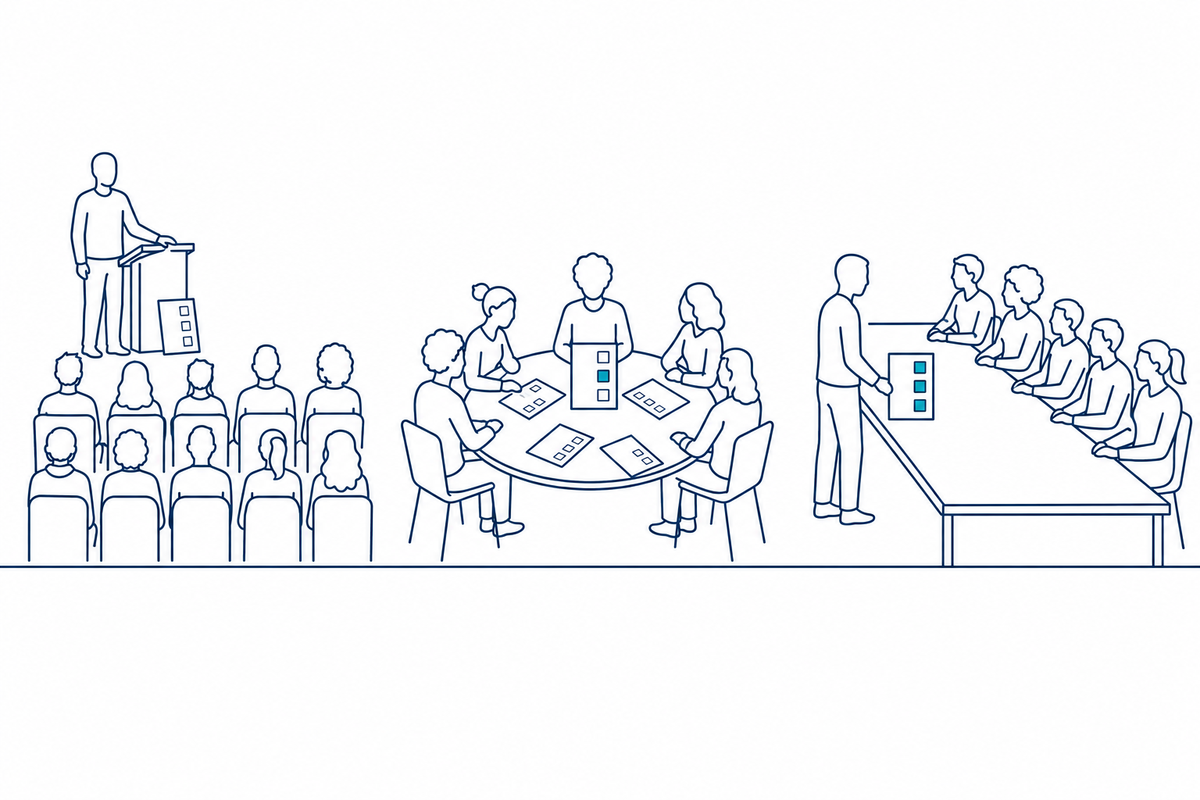
Any of these runs as a 45- to 60-minute keynote, a half-day workshop, or a multi-session series, in person or online. The longer list of sessions — continuity planning, scenario planning, ethics, lean strategic planning — is still available for hosts who want a full program.
Three things to know before you write.
Engagements are paid. The newsletter is free to readers because institutions pay for professional knowledge; a speaking engagement is one of the ways they do. Fees slide with the size of the host, the audience, the format, travel, and whether the session stands alone or opens a series, a cohort, or a network license of the tools behind the newsletter. A small state association and a national conference will not pay the same number, and they should not. Tell me your budget in the first message and I will tell you what fits it.
I will say no when it is the wrong fit. The sessions above are built for nonprofit executives, boards, and the funders and associations that hold them together. If you want an hour of encouragement with no homework, or a general-audience motivational slot, I am the wrong booking, and I will tell you so on the first call and suggest someone better.
One session can be the start. Broward's ninety-four-person open session became three cohorts. Richmond's series began with a survey and ended with plans. If you already know you want more than a morning, the Funders & Networks page describes the four shapes that can take.
What the evaluations say.
Unattributed by design. These are from post-session evaluations collected by host organizations.
Truly one-of-a-kind. Makes really complex issues extremely interesting and brings an enthusiasm to each subject which makes the subject matter engaging and easy to understand.
Audience evaluation
A compelling and informative presenter on risk analysis and risk management. Takes complicated and arcane subject matter and makes it easy to understand and digest into actionable steps. Whether your organization has a highly organized risk management function or is just starting out, the presentation and information can be highly useful.
Audience evaluation
Fantastic. He has an amazing command of the material and presents in a very straightforward, understandable way.
Audience evaluation
His command of the subject matter is superb, he is an encouraging discussion leader, and he is open to comments.
Audience evaluation
Start with the room. Tell me who will be in it, when, and what you want them to leave with. Three exchanges, one call, and your members get a session they will still be using nine months later.